

It's Friday afternoon. Your class has been through a full week of learning, behaviour management, transitions, and about a thousand small moments you didn't have time to really see. That quiet kid in the corner who's been struggling? The one who never raises their hand but always has great ideas? You wanted to check in with them. There was just no time.
Relationships are the foundation of everything we do in primary classrooms. Better behaviour, stronger engagement, improved wellbeing; they all flow from students feeling genuinely seen and heard by their teacher.
But seeing and hearing every learner, every week, feels impossible when you're juggling 25+ individual needs, curriculum demands, and the emotional labour that comes with teaching.
The Friday Check-In Notebook System is my answer to that impossible challenge.
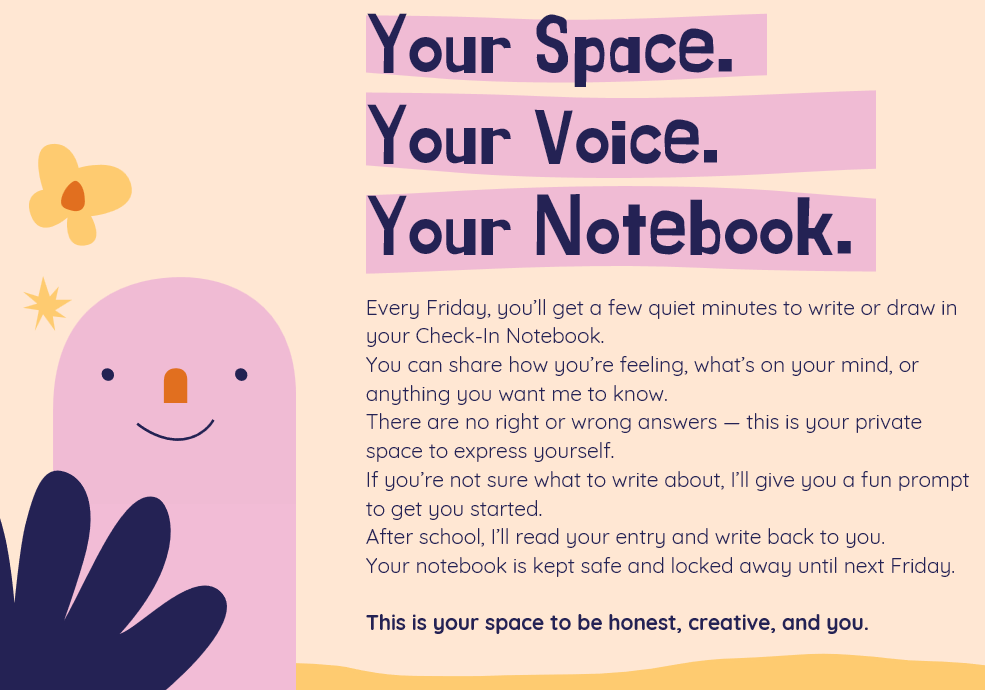
It's a simple, predictable routine that gives every student (including the talkative ones, the quiet ones, the anxious ones, the funny ones) a safe, private space to share how they're really feeling. And it gives you a low-prep way to connect with every learner, every single week.
I've been using this system in my own upper-primary classroom for years. It works. Students open up. They feel heard. And the relationships in your classroom shift.
Here's what you need to know.
Primary students are navigating big feelings in busy, structured days. Friendship troubles, family worries, learning anxiety, sensory overwhelm; these things don't announce themselves in the general classroom setting. They hide. And often, by the time a student acts out or shuts down, the concern has been sitting silently for weeks.
Meanwhile, teachers are stretched thin. You want to know what's happening in your students' lives. You want to check in. But between literacy blocks, numeracy, specialist classes, lunchtime supervision, and 47 other priorities, one-on-one conversations with every student feel like a luxury you don't have.
Here's where the Friday Check-In Notebook changes everything:
It's structured, so it actually happens. A Friday routine is predictable. Students know what to expect. You know when it's happening. No more "I meant to ask them about that."
It gives quiet students a voice. Some of your best learners never raise their hand. Some students process internally and need time and privacy to articulate their thoughts. A notebook lets them communicate in their own way, at their own pace.
It's low-prep. You don't need special training, a new program, or extra planning time. You need a notebook for each student, a prompt, and 5-10 minutes.
It builds trust. Knowing that their words are private, that their teacher listens, and that they'll get a thoughtful response; that's powerful. Students feel seen. Relationships deepen.
It supports all learners. Neurodivergent students, anxious students, ESL learners, students who learn through drawing; this system works because it offers choice. Write, draw, make a list, create a map. There's no "right way."
What Is The Friday Check-In Notebook System?
Let me break it down simply:
Set it up for each Friday, usually after lunch. Students will be given their notebook and this is where they have the opportunity to write about anything they want/need you to know. It could be personal, it could be something happening at home and they don't have the courage to talk to you face-to-face about it, it could be a problem they had in the playground this week.
But, here is the catch. Some students will admit they have nothing that they want to share, and that is OK. Instead, they can use the prompt on the board. It might be: "Draw a comic about something funny that happened this week" or "Write about someone who made your day better" or "List five words that describe how you feel today." By using the prompt, student can still fell like they are building a unique relationship with you and that you are always going to be available for them when the time arises. It may never arise, and that is OK too.
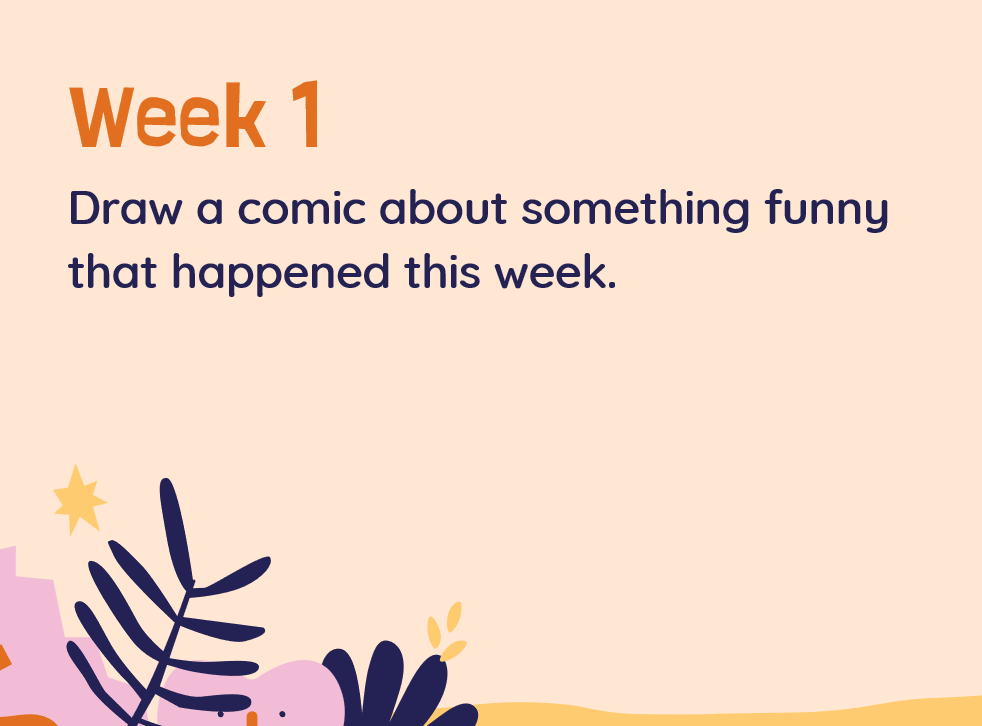
Students have 5–10 minutes to respond. They can write, draw, make lists, or respond however feels right to them. There's no pressure, no grades, no "right answer."
You read their entry after school and write a short, thoughtful response. It might be a sentence, a question, a doodle, or just: "Thanks for sharing this with me. I hear you."
Notebooks are stored securely until the following Friday, so students know their words are truly private.
At the end of the year, students take their notebook home as a keepsake; a collection of their thoughts, feelings, and growth across the entire year. Many teachers tell me students reflect on these years later and reconnect with who they were.
That's it. Simple. Powerful. Sustainable.
The Prompt Variety: Why This Matters
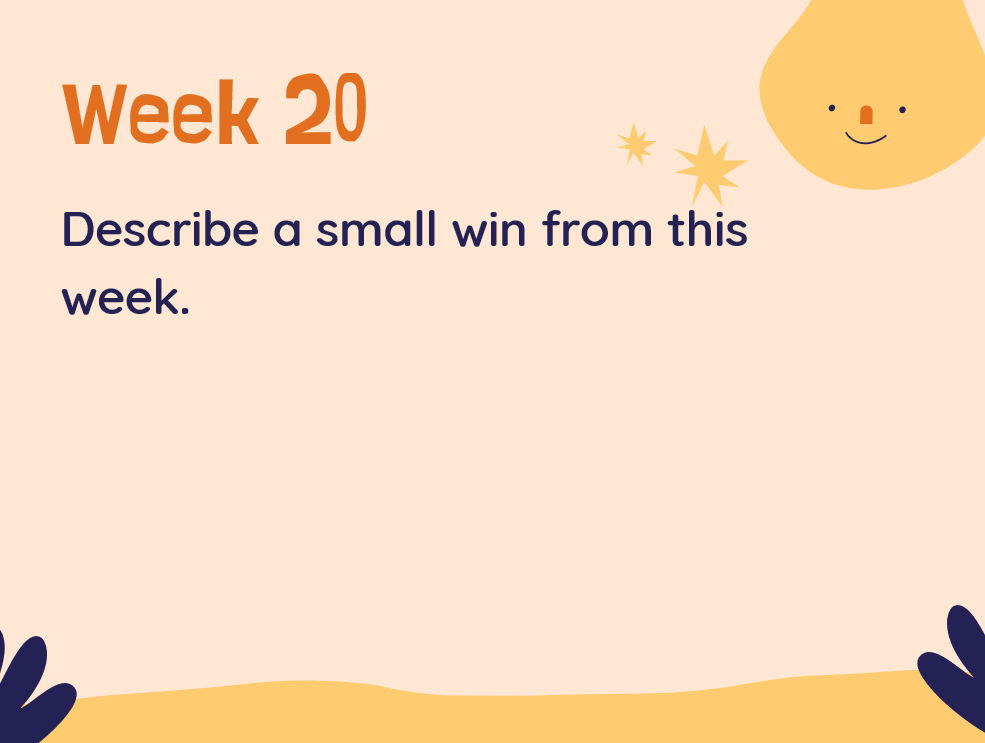
One of the reasons this system works so well is the carefully designed prompt mix. I have 50 prompts ready to go, over the school year all of these wont be used, but it is nice to have a few extra up my sleeve (just in case). Over the school year, students encounter:
Creative and imaginative prompts that tap into play and possibility:
· "Draw yourself as a superhero. What's your power?"
· "If you could visit any fictional world, where would you go?"
Reflective prompts that build emotional awareness:
· "Write about a moment you felt proud recently."
· "One thing you're proud of yourself for today, big or small."
Grounded, practical prompts that celebrate the everyday:
· "List three things that help you calm down when you're stressed."
· "List your top five comfort foods or snacks."
Playful, low-pressure prompts for weeks when deeper reflection feels like too much:
· "Make a playlist of five songs that match your mood."
· "Draw your brain as a weather map. What's the 'forecast' today?"
This variety is intentional. Not every week asks students to dive deep. Some weeks are silly. Some weeks are calm. Some weeks are quietly powerful. This mirrors real life, and it keeps the routine fresh and engaging all year. REMEMBER: Students do not have to use the prompt. They can use this time to share with you and build that relationship with a trusted adult.
How to Run It: A Step-by-Step Guide
Before You Start: Introduction
Introduce the Friday Check-In as a special, private time in your classroom.
Explain that:
· Their notebook is only for you to read
· There are no marks, grades, or "right answers"
· They can write, draw, make lists; whatever feels right
· You will read their entry and write back
· It's a safe place to share feelings, concerns, or anything on their mind
Make it clear that responding to the prompt is optional. They can follow the prompt, or share something else entirely. The goal is to give them a space to express themselves, not to fill a form.
Each Friday: The Routine (5–10 minutes)
1. Set the tone. Play quiet background music if it helps. Dim the lights if your classroom allows. Signal that this is calm, focused time.
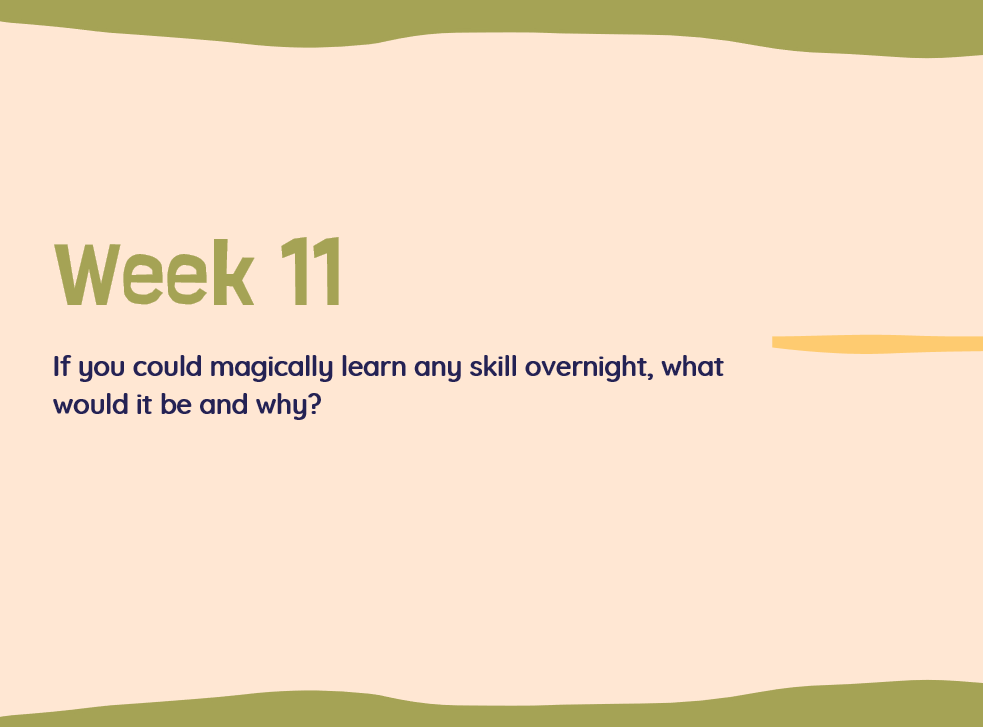
2. Show the week's prompt on the PowerPoint slide. Read it aloud so everyone hears it clearly.
3. Offer options. "You can respond to this prompt, or you can write or draw about anything you want to share with me."
4. Give them time. 5-10 minutes is plenty. Some students will write a paragraph. Others will draw a picture. Both are perfect.
5. Collect notebooks. Have students place them in a set location (a basket at the front of the class works well). Don't read them straight away; it signals that you're not taking the information lightly.
6. Lock them away until you have time after school to respond.
After School: Your Response
Read each entry. Then write a short response. It doesn't need to be long.
Some examples:
· "This made me smile. Thanks for sharing! 😊"
· "That sounds like it was tricky. I'm proud you kept trying."
· "Tell me more about this next time we talk?"
· "I had no idea you felt this way. I'm listening."
If a student shares something important or concerning (worries about home, peer conflict, anxiety), follow your school's wellbeing procedures and check in with them in person.
Throughout the Year: Build Trust
Be consistent. Do this every single Friday. Consistency builds trust.
Keep responses short. You don't need to write paragraphs. A sentence is enough. Authenticity matters more than length.
Normalize simple entries. Not every week will be deep. Some weeks students will write one sentence. That's okay. The routine itself is the point.
Model calmness. The tone you set becomes the tone of the notebook. If you rush through it, students will sense that. If you approach it with genuine interest, they will too.
End of Year: The Keepsake Moment
This is the part that really matters.
At the end of the year, return all the notebooks to your students.
Ask them to take a moment and flip through their entries from across the year. What were they worried about in Week 3? What made them proud in Week 27? What were they dreaming about in Week 33?
For many students, this is the first time they've seen their own emotional journey written out. They see growth they didn't notice. They see that worries passed. They see moments of joy and resilience.
Tell them to take the notebook home and keep it somewhere safe. Some students will open it again in 5 years. Some in 20 years. Either way, they'll reconnect with who they were in your classroom.
That's deeply impactful.
Common Concerns (And Why You Don't Need to Worry)
"Won't Some Students Just Write Rubbish?"
Maybe. Some students will test boundaries. Some will write silly things or try to be funny. That's developmentally normal.
Here's what to do: Respond warmly anyway. A doodle. A laugh emoji. A question: "What made you think of that?" Over time, as they experience your genuine interest and the privacy of the space, the tone shifts. Students settle in and start sharing more authentically.
"What If a Student Writes Something Worrying?"
Good question. This is why you have school wellbeing procedures.
If a student shares something concerning (anxiety, family stress, peer conflict), you follow your school's protocols. You might check in with them privately, speak to a counsellor, contact home, or escalate appropriately.
The notebook isn't replacing those systems; it's feeding them. You now have crucial information about what's happening in your student's inner world. That's a good thing. It's an important thing.
"Isn't This Just Another Thing I Have to Do?"
No. This is 5-10 minutes on Friday afternoon. Short responses after school. It replaces the vague guilt you'd feel about "not connecting enough with that quiet kid" because now you are connecting.
It also builds classroom culture in a way that saves time elsewhere. When students feel genuinely seen and heard, behaviour improves, engagement increases, and you're not spending energy managing disconnection.
"Will Upper-Primary Students Actually Take This Seriously?"
Yes. Upper-primary students (typically Years 4-6) are at the perfect developmental stage for this. They're old enough to write meaningfully and handle privacy. They're young enough that a simple routine feels special and safe.
And they want to be heard. They want an adult who listens. They want to know their feelings matter. This system gives them exactly that.
Why Teachers Love This System
After running this in my classroom, I've seen:
Stronger relationships. Students who barely spoke to me by at the start of the year are sharing real things within a few months. The quiet kid becomes less quiet because they feel safe.
Better behaviour. When students feel genuinely seen and heard, behaviour issues often diminish. They're not acting out for connection anymore because they already have it.
Emotional literacy without a program. You're not running Social-Emotional Learning as a separate subject. You're naturally building it into your week, in a way that feels authentic and responsive to your actual students.
Early warning system. You learn about struggles before they become big problems. Friendship conflict, anxiety, learning frustration; you're aware and can support early.
Relief for neurodivergent and anxious students. Some kids can't verbally express what they're feeling. A notebook lets them communicate their needs safely.
A keepsake they'll treasure. Years later, students still remember their Friday Check-In notebook. They think of you. They think of the year they had. Most importantly, they remember feeling heard.
Getting Started
The Friday Check-In Notebook System comes with everything you need:
✨ 50 Weekly Prompts (beautifully designed PowerPoint slides, ready to project—no editing required, but you can customize if you want)
✨ Teacher Guide with step-by-step instructions for introducing the routine, responding to entries, handling concerns, and storing notebooks ethically
✨ Printable Reference Sheet with all 50 prompts on one page, so you can keep it on your desk for quick reference
You just need to add:
· A small notebook for each student
· Pens or pencils
· A locked cupboard or drawer to store notebooks
That's it.
You can start this coming Friday.
Ready to Build Deeper Connections?
The Friday Check-In Notebook System is designed for primary teachers who want to strengthen relationships without adding complexity or prep time.
It works because it's simple. It works because it's consistent. It works because it reminds students (and you) why you chose to teach in the first place.
Download the Friday Check-In Notebook System and start your own routine this week.
Your students are waiting to be heard.
